
Dungeons & Dragons as a therapeutic practice
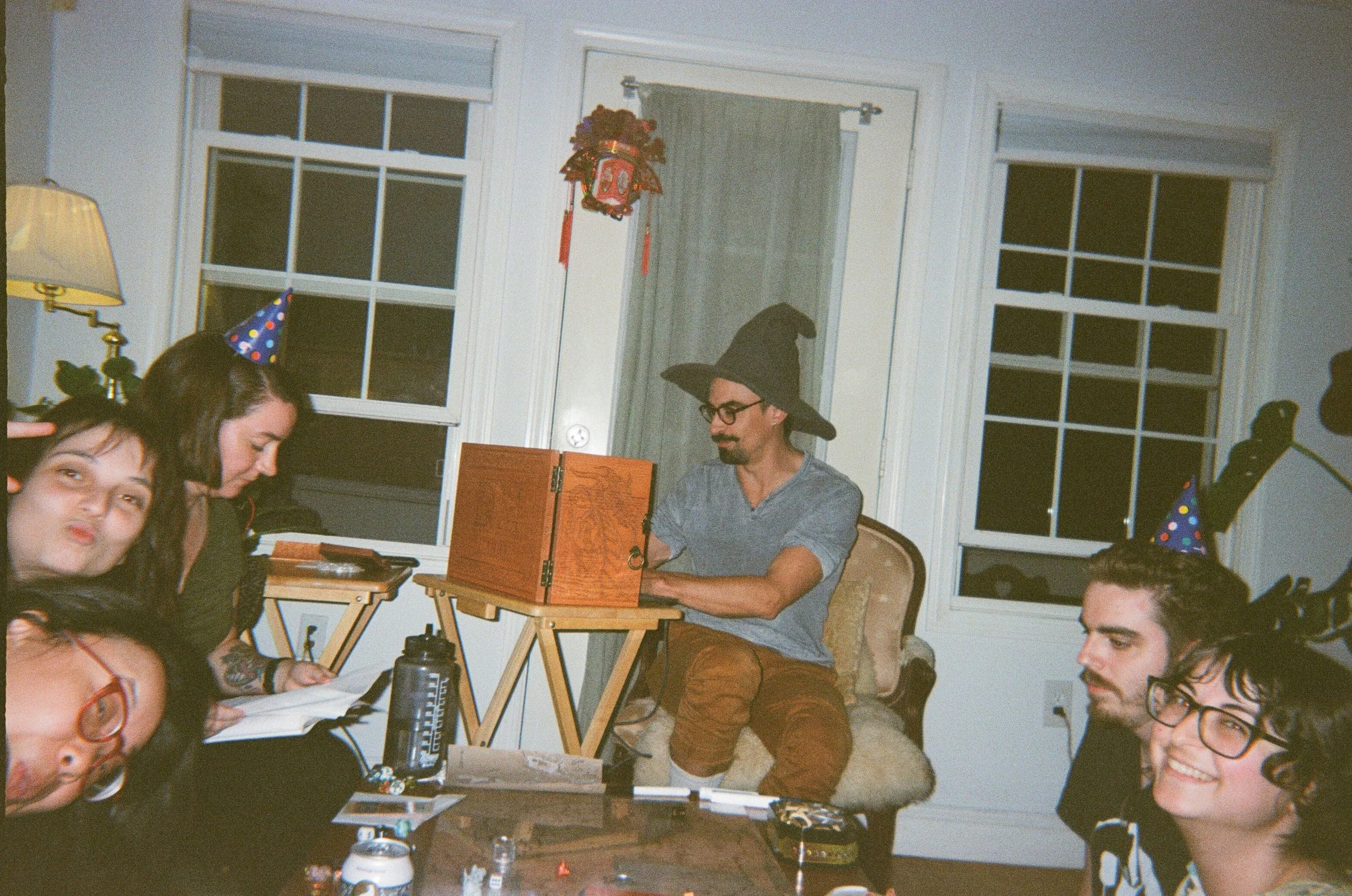
Hi! We’re developing a program of Dungeons & Dragons gameplay sessions as a form of psychodrama, play therapy, and community peer support space.
Participants explore situations they find difficult, practice social and problem-solving skills, and develop empathy, in a safe and fun environment. The goal is to create a form of therapy with no pressure or barrier to entry, fostering therapeutic creativity through intuitive play.
A lot of people feel inhibited trying to express themselves creatively. Our goal is simply to invite people to play a game, creating a group setting where the focus is having fun, thereby passively providing opportunities for therapeutic creative expression, such as improvised storytelling and performance, visual arts, and music, as well as organic roleplaying exploration of issues important to them. In so doing, this program will combine expressive arts therapy with psychodrama and play therapy.
Health benefits
Roleplaying games’ therapeutic value has been studied extensively the past few years (see Dr Megan Connell, “Tabletop Role-Playing Therapy”). As as a form of group therapy, RPGs offer a low-pressure, play-oriented environment to explore issues ranging from emotional dysregulation, anxiety, PTSD, to autism spectrum disorder and many more.
Additionally, as a social activity, this pilot project would tackle the loneliness epidemic head-on. Per Mental Health America: "Peer support has a large base of evidence of its effectiveness for people navigating mental health distress, including the reduction of hospitalization rates and reduction of anxiety and distress."
Success metrics
We'll solicit feedback from participants and staff using print or online feedback forms with simple 5 point scale questions. At the end of each session, the participants will be given these forms to measure how they felt both before and after the session, which we can also use to measure their responses over the eight weeks of the game program.
Staff will be asked to give their observations during those weeks - any creative or behavioral changes among the participants, increased social connections, etc - with qualitative questions and/or brief interviews at the end.
The program will be considered a success if participants express positive growth and an increased sense of wellbeing, and the participant organizations want to keep working with us.
About us
Beth Killian is a clinical social worker and workshop facilitator with more than 15 years of experience in group facilitation and expressive arts program development.
Harry Aspinwall is a visual artist, performer, and storyteller with decades of experiences in art practice and running arts and performance workshops, and a special interest in immersive games and non-traditional group storytelling. He has run roleplaying games both in small group settings and larger shows with audiences.
We've played D&D together many times, and have both wanted to explore the therapeutic potential of roleplaying games. We plan to meet weekly to develop the details of the program, from the storylines and adapting/simplifying the rules of the game, to implementing safety procedures (already an established practice in roleplaying games), to coming up with artistic assignments, to developing success metrics and feedback forms.
Testimonials
BONNIE (roleplaying game participant): Roleplaying games are a form of collaborative storytelling with the same artistic merit as any other form of storytelling, offering entertainment and escapism, exploring real-world themes, testing ideas. Play is crucial to learning creative, social and problem-solving skills, and exploring diffi cult subjects at a safe remove from the real world. In Harry’s game, I enjoyed the opportunity to roleplay as someone who acts and reacts differently than I do. It gave me the opportunity to get out of my own head and behave in ways I don't normally behave, which was very freeing.
TRE (roleplaying workshop performer): Roleplaying games are inherently a creative storytelling medium. They show how to work within the constraints of a frame, and how to collaborate with others. Learning that loneliness is worse for you than smoking a pack of cigarettes a day has highlighted how integral the social element is to the benefi cial effects of RPGs. Having a designated context to engage with others, with a role to play, can help people who struggle in social settings by giving them clear rules and expectations on how to engage with the space. JACOB (roleplaying game participant) My favorite thing about your sessions is the way you situate us in the story and make us feel like our decisions have weight. Roleplaying games have immense value as both collaborative storytelling and imaginative play. They have made me more thoughtful, open minded, and cooperative. Playing in a fi ctional space lets me explore complicated ideas and navigate interpersonal dynamics in a fun, low-stakes way.
AMANDA (roleplaying game participant): Harry weaves together narratives using themes of personal growth and development, community building, and challenging decision-making. Meeting up with a group of friends to use our imaginations often ends up being a highlight of my week. It allows me to engage with high stakes challenges in creative ways, without pressure or real risk. After a long day of work, D&D feels playful and cathartic; I leave the table feeling less stressed and excited for the next chapter.
MADISON (roleplaying game & workshop participant): It was freeing to act in character without shame. I loved your fl exibility as a facilitator with the storyline and pacing because it allowed us to explore comfortably and be challenged. Roleplaying games can nurture confl ict resolution, creative thinking and problem solving, open-mindedness, curiosity, and compassion. They can also help people explore themselves and the real world through a game. Having fun and bonding with people is huge, especially in the age of the Internet, engineered social interactions, and AI-generated answers.
MATT (film collaborator, group facilitator of creative writing and improv at rehab clinics): Having worked with Harry as a collaborator in storytelling for several years, I can confi dently and wholeheartedly say how nourishing and generous he is as a creative partner. He leads in a way that allows abundant room for shared play, and invites in all facets and shapes of creative contribution with warmth and joy.
BETH (roleplaying workshop performer, expressive arts therapist, MSW facilitation consultant): As a licensed clinical social worker in Rhode Island who utilizes creative expression in my practice on a daily basis, I see a strong connection between the work Harry is doing in his D&D groups and therapeutic benefi ts for groups of any age. I have participated in Harry’s groups as a peer in the past, and was fascinated by the social-emotional skills that arose during the process. Harry’s roleplaying game sessions utilize communication and problem solving skills, risk taking, creative connection and improvisation with a group, and can even involve processing past experiences through the safety of a character / avatar. I was so excited when Harry shared his idea of expanding this creative group more intentionally. The therapeutic benefi ts of roleplaying games, and specifi cally the way Harry facilitates them, are so tremendously clear. I believe this can help transform wellness within communities who may not have regular access to similar opportunities for imaginative and creative play.
Quisque iaculis facilisis lacinia. Mauris euismod pellentesque tellus sit amet mollis.